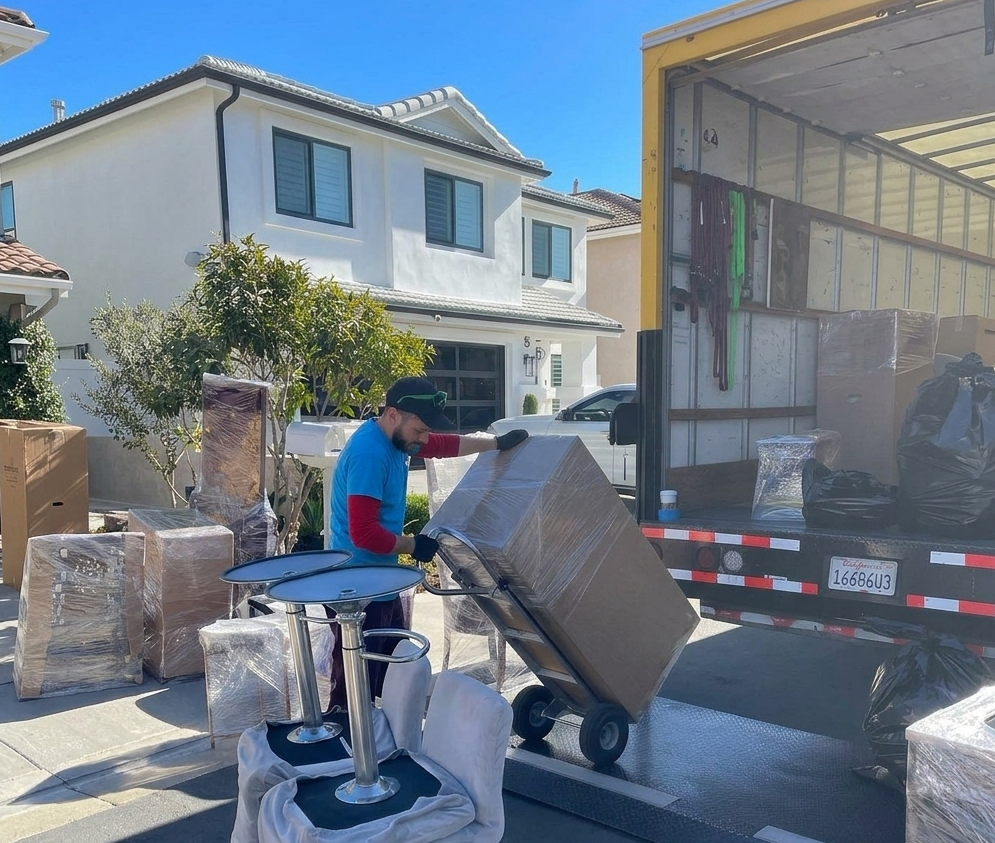
Long-distance moving introduces a category of risk that local moves simply don’t carry. When your belongings travel hundreds or thousands of miles across multiple days, through changing weather, different handling environments, and logistical handoffs, the margin for error expands considerably. Most people who have experienced a difficult long-distance move don’t describe one catastrophic failure — they describe a cascade of smaller problems that compounded into something genuinely disruptive. Understanding what those problems are, and how professional movers are specifically equipped to prevent them, is the most practical preparation any relocating household can do.
Damaged or Broken Items in Transit
Damage during transport is the issue most people fear first, and for good reason. Over a long haul, boxes shift, stacks settle, and vibration works on improperly packed items in ways that a short local move would never reveal. Fragile items — mirrors, artwork, electronics, dishware — are especially vulnerable when packing has been rushed or done without professional technique.
Professional movers address this at the source. Experienced packers use purpose-built materials: double-walled boxes for heavy items, custom cell dividers for glassware, acid-free tissue and foam wrapping for artwork and antiques. They understand load distribution inside the truck — heavier items on the bottom and against the cab wall, lighter boxes stacked on top, furniture blankets between every hard surface. These aren’t preferences; they are trained protocols that directly reduce transit damage rates.
Equally important is the pre-move inventory. A reputable long-distance carrier will document the condition of every significant item before loading, with written notes and often photographs. This protects both parties: the customer has a record if damage occurs, and the mover has documentation of pre-existing wear that might otherwise generate a disputed claim.
Delayed Delivery and Missed Windows
One of the most stressful long-distance moving experiences is waiting for your belongings to arrive while living out of a suitcase in an empty home. Delivery delays are more common than most customers anticipate, and they cascade — a delayed delivery means delayed unpacking, delayed settling in, and in some cases, delayed ability to return to work or normal routines.
Delays happen for several reasons: truck breakdowns, weather events, driver availability, or the carrier consolidating multiple shipments onto a single truck to optimize routes. That last practice — known as a consolidated load — is standard in the industry but means your belongings may sit in a warehouse or make intermediate stops before reaching you.
Professional movers manage this through realistic scheduling and clear communication. A trustworthy carrier will provide a delivery window rather than a guaranteed single date, and will proactively communicate any changes to that window. The best companies assign a dedicated move coordinator who serves as a single point of contact throughout the haul — someone you can call for a status update without being transferred through a call center.
Hidden Charges on the Final Invoice
Few moving experiences are more infuriating than receiving a final bill that bears little resemblance to the original estimate. Yet it happens regularly, and it happens to customers who believed they had done their due diligence.
The most effective prevention is understanding what type of estimate you received and what it legally obligates the carrier to honor. Customers who choose a binding or binding not-to-exceed estimate are protected from most post-move billing surprises. Those who accepted a non-binding estimate without scrutinizing the tariff details are more exposed.
Professional movers who operate with integrity conduct thorough pre-move surveys — either in-person or via detailed video walkthrough — specifically to identify every variable that could affect the final price. Items that commonly generate unexpected charges include:
- Shuttle service fees when a full-size truck cannot access the property directly
- Long-carry charges for distances exceeding the standard threshold between the truck and the door
- Stair carries beyond the first flight at either origin or destination
- Furniture disassembly and reassembly for items too large to move intact
- Storage-in-transit costs when the destination is not available on the scheduled delivery date
- Redelivery fees if no one is present to receive the shipment at the agreed time
A mover who surfaces all of these during the estimate phase — even when they increase the quote — is demonstrating exactly the kind of transparency that protects customers from unpleasant surprises later.
Lost or Misdelivered Items
On a long-distance move, especially one involving a consolidated load or temporary warehouse storage, items can be misrouted, left behind, or simply lost in the shuffle. A single box mistakenly loaded onto a different truck can take weeks to locate and redirect — if it is located at all.
The primary defense against this is a meticulous inventory system. Every professional long-distance carrier should provide a numbered inventory sheet listing every item loaded, with corresponding numbered labels affixed to each box and piece of furniture. At delivery, items are checked off against the inventory as they enter the new home. Any discrepancy is documented immediately, while the crew is still present and the claim process can begin without delay.
Customers can reinforce this process by maintaining their own copy of the inventory and personally checking items off at delivery rather than leaving it entirely to the crew. The few minutes this takes can prevent weeks of bureaucratic effort to recover a missing item.
Poor Communication Throughout the Move
Perhaps the most underappreciated source of long-distance moving stress is not physical damage or financial surprise, but the silence between booking and delivery. When customers don’t know where their belongings are, when they’re arriving, or who to contact with questions, anxiety fills the gap.
Reputable moving companies have recognized this and invested in communication infrastructure accordingly. Dedicated move coordinators, real-time shipment tracking tools, and proactive status updates at key milestones — loading complete, in transit, approaching delivery — transform the customer experience without changing a single aspect of the physical move. The belongings travel the same distance either way. The difference is whether the person waiting at the destination feels informed and respected, or abandoned.
When evaluating moving companies, the quality of communication during the quoting process is a reliable preview of what you’ll experience once the truck is on the road. A company that responds promptly, explains clearly, and follows up without being asked is one that has built a culture of accountability — and that culture doesn’t stop at the point of sale.
The Pattern Behind Every Preventable Problem
Almost every common long-distance moving issue traces back to the same root causes: inadequate preparation, insufficient documentation, and poor communication. Professional movers who invest in all three — thorough pre-move surveys, complete written inventories, and proactive client communication — don’t eliminate risk entirely, but they reduce it to a level that most customers find entirely manageable. The move will still be demanding. It will still require adjustment. But it won’t become a story you’re still telling years later about everything that went wrong.